On my mom’s first birthday after she died, I went out for lunch with one of her dearest friends, and one of my dearest people, Hana. Four and a half months prior, Hana took me out for brunch on my first motherless birthday, my thirtieth, and I told her I was pregnant, and she beamed like only one of the dearest friends of a would-be, couldn’t-be grandmother would. Implicit in the light that shone out of her was the light being sucked inwards, into a black hole of grief.
She looked at me with the regretful smile of a person already familiar with this sacred covenant between joy and sorrow into which I had unwittingly entered; with the way in which we could no longer be intensely happy for the living without also being deeply sad for the dead. Mom, in that moment, or maybe in all moments, was both dead and alive. Were we sad for dead Ora who never got to be a grandmother, and happy for living Ora who almost was? Or were we sad for the living for her almost, and happy for the dead for her upcoming resurrection—a living, if dead, presence in her grandchildren’s hearts?
Either way, mom was there when I told Hana. Still, you could see the back of her eyes searching, her fingers itching to call that elusive phone number—out of reach just enough that we could never find it, but not quite enough for us to give up hope. Orale, did you hear? You’re going to be a grandmother! And in that, the covenant: the joy of wanting to tell her, the sorrow that she couldn’t.
As mom was preparing to die, during the last couple of months we were living with her, I tried to tell her that we were seriously thinking of having kids. I told her, in fact, several times, but although her number was still in the phonebook, nobody, as it were, was home. She was half there and half not there, the ratio decreasing as we approached D-Day, ascending as we watched. It was as if she was looking down at the checkmated chessboard of her life, no longer caring about the next move, getting ready to clear the board for another game.
I’m not sure what I was hoping to achieve by telling her: maybe the sense of normalcy of a mother rejoicing in her daughter’s coming of age, or the glimmer of a horizon in an interminably terminal journey. I think I was seeking penance, trying to make amends for having withheld progeny for so long, for having stood our ground for a decade, wasting what had turned out to be Imma’s last chance at savtahood. And also, it was a last-ditch effort of magical thinking: Look, we give in! Now let her live.
The first few years after she died, I was taken by surprise by how grueling dead birthdays can be. Dead birthmonths, really. I was prepared for the yahrzeit, sort of, and even then not for the funk of the two months leading up to it, the daily anniversary of her gradual ascension. I was at a loss as to how to best observe her birthday, how to navigate the quantum dilemma of my mom being both dead and alive: I didn’t want to wallow in grief—and young children abounding, I couldn’t—and just celebrating it felt forced and out of touch.
For the first few, I simply waded through the bog, sad and heavy and apologetic: it was just her birthday, why was I so sad? I went out with Hana, talked to Abba and Muz, made some of her favorite foods, lit a candle. I wrote birthday cards to a living mama and a dead one, my sacrificial offering to the gods of the covenant. Twice we organized a big memorial concert with her friends; in both I addressed the audience while carrying the current nursling on duty, looking out at faces beaming back at me with whatever light could escape their grief.
But then there was a growing Ella, and I wanted to give her something more than a dazed mother, squinting her way through the haze that by then had enveloped the entire month of August. I tried to imagine a tradition that would infuse my dead mama with some life, that would allow her to dance amongst the living, at least for a day. And so, when she turned 64 for the fourth time, I invited my closest friends to a BYOD (Bring Your Own Dead) gathering. For one evening, I suggested, we invite our dead loved ones to spend some time with us all. “My mom is in need of company. She’d like to hang out with your deads. Bring out your dead, bring out your dead!”
And my friends came, deads and their favorite dishes in tow, and it was sweet and moving and awkward. And also, not quite it: with too many two year-olds, not enough whiskey, and too much raw grief. Heir to a long line of relentless perfectionists, I could feel myself going, “Eh, it’s not exactly what I wanted”—just as my mother’s eyes would betray her while her mouth gave thanks, every time she received a gift. But still, it rang true enough to make my heart strings tingle, warm enough to keep the flame of my BYOD fantasy alive.

Last year, I spent mama’s birthday in Hawaii, my first dead birthday with my sister Muz. Like in a Venn diagram of dead birthmonth funk, we met where our sorrow and joy overlapped, spending most of our time in our separate bubbles. On the day of, we packed the kids into the car and drove to a nearby tidepool. In Muz’s mind was a beautiful ritual, one that would have benefited from a more ritually-inclined sister, and fewer kids. And there she was again—“Eh, not exactly it”—my disappointed mama, dancing by the sea. And there we were, gathering found objects for our little mandala-altar, searching for the best spot, negotiating with the kids exactly how much of the mandala they could take home with them: a gift from the dead.

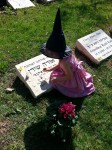
When I was still in Israel, I would visit my mother’s grave twice a year—like a pilgrim with only two holy days. I found solace in the physicality of it: I would lie on the earth that is part her and dig my hands into the grass that she nourished, as I sang songs to her bones. I would close my eyes and try to remember her smell, still in the nook of her armchair and perfume bottles I kept, the touch of her stalky fingers, both gentle and firm. I would try to conjure up the exact way her neck connected to her shoulders, the feel of her soft, soft hair.
I would bring a floral offering, debating which arrangement she’d like best, brushing off unsolicited advice on how to best keep them alive with varying degrees of politeness. When Ella turned old enough to participate, she started coming with me to the store and choosing her own flowers. She would lay them on the grave for the duration of our visit, and then, invariably, take them back: a gift from Savta.
The first time she asked, I hesitated. But then I thought: surely there is nothing more savta-esque than spoiling your granddaughter rotten, even from beyond the grave. I watched in awe as this little person invented her own rituals, choreographed this quantum dance—crafting a relationship, a literal give-and-take, with her dead grandmother.
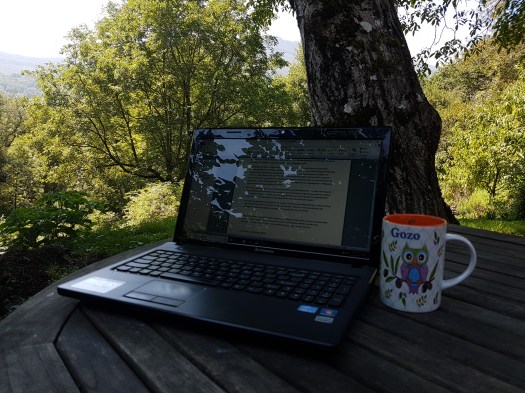
Today, on her 9th dead birthday, I am still far away from my mom’s grave. I sing to her bones from the forest in the South of France, my heart and voice searching for the frequency that will carry them through the earth and across the sea, now between us. I am second generation to ex-kibbutzniks, imagining my collective; third generation to European refugees, looking for my shtetl; fourth generation to the last practicing Jew, inventing my rituals, learning how to pray, summoning the dead. I bring my own dead with me—carefully, in a box marked “Fragile” and “This way UP”—along with my few earthly possessions, as we look for our home.
 All of the Worlds