Recently, studying for a psychology midterm, I stopped time. I sat on the sofa and watched the clock go from nine-thirty to nine-thirty-five for a full hour. If someone had fired a bullet at me, I would have been able to dodge it—I would have stood and admired its trajectory as it approached me, calmly stepping aside before it was too late. A day later, sitting in a Silver classroom, I waited for the midterm to begin. (I’ve been waiting for almost two hours now.) I had arrived twenty minutes early. I had gained superhuman abilities—I was super-Tali, superwoman, supercilious. Super-silly. My pupils were dilated, my movements jerky. I was high on knowledge, high on studying five hundred pages of personality theories.
Waiting, I know that if I get the highest grade—I do, I get taken out of the curve—I will be happy for an hour, maybe a day. My textbook tells me I have a distorted self-concept. There’s an illustration of me, holding up an A-minus and looking disappointed. I am.
Out on the street, I swim through Broadway as post-exam euphoria sweeps over me. I am completely unafraid. I smile at myself. I laugh out loud. I look into people’s eyes without turning away. Other times, my walk is carefully constructed, my hands placed for maximum nonchalance, my pace the calculated rhythm of ease.
In the subway, I beam at my reflection. I stare at the express train as it heads toward me on parallel tracks, lazily watching a catastrophe waiting to happen.
I’m in the closet, again, waiting to be found. Sometimes they come looking for me, after a long while—perplexed at my perseverance—but most often I just give up. As I grow older, I start running away. I sit on the wall overlooking the entrance to our building, waiting for their worried figures to rush out. I wait to be missed. At twenty-one, I run away to New Zealand, and I wait. He finds me.
On a bench, in a hut, next to the lake with the swans, he asks me if I know what he’s thinking, and I say yes. I do.
“Maybe later,” in a turtle sanctuary in Prospect Park, over an improvised picnic, after a game of SET.
He climbs mountains with me. I wake him up early in the morning, before sunrise—if I came down for dinner, he promised, we would climb up in the morning and watch the sunrise from the summit. Another time, we climb the wrong mountain looking for the whispering giant. Our knees are bloody, our spirits high. By the time we climb Jabal Moussa he has to pause every few minutes to catch his breath. He pretends to explain things along the way. Climbing Masada, his heart threatens to give out. A year or so later, it almost does—I fly home for his quintuple bypass operation, both his daughters by his side.
When my sister was born, my father looked into her eyes and knew that she was his soul mate. My sister’s first word was or, which means “light” in Hebrew. As a baby, she used to levitate—bouncing from one side of the room to the other, like a miniature yogi. My first word is unaccounted for, though two of my favorite words were “chicken” and “horsy,” which I enthusiastically assigned to all bipeds and quadrupeds, respectively. When I was born, I looked into my father’s eyes and communicated to him, in no uncertain terms, that he need not worry anymore: he would be taken care of.
In my father’s stories, my sister is an Eastern guru, an old soul who upon reentering the world could think of nothing better than to utter the name of the intangible illumination she saw before her. I seem to have spent my early childhood pointing at innocent bystanders and calling out the names of barnyard animals. She is his deific soul mate; I am his caretaker—the simple-minded, good-hearted daughter who will always take care of him.
After all, I don’t have much choice in the matter. It had been prophesied.
I’m listening to the Police. Actually, I’m listening to my sister singing “Roxanne;” she, in turn, is listening to it on her Walkman. It’s the summer of 1988, and my sister and I are visiting my grandfather in South Africa. My sister is in love with Sting, and I’m in love with my sister. It’s mostly unrequited—she convinces me that I’m an adopted alien, forces me to grovel at her feet and profess my unwavering devotion. She directs me in plays and musicals of her own composition—she is a strict mistress, but I adore her. My ears pressed against the shut window into my sister’s teenage world, I subsist on her musical leftovers.
I’m listening to Pete Seeger and The Weavers. I am nine. Mustached and yielding a broomstick-sword, I challenge my similarly mustached sister to a duel to the death. We’re fighting over the heart of a Spanish beauty—our curtain-draped, lipstick-smeared friend Ilana. We both lose when she escapes with the simple, but good-hearted street cleaner—her brother Yoni. “Viva La Quince Brigada, Rumbala, Rumbala, Rumbala!”
I’m ten, in my grandmother’s living room, pleading for the rights of short people. “Short people are just the same as you and I,” I sing, “All men are brothers until the day they die.” Randy Newman backs me up. I’m in a white oversized T with a picture of a cat on it. My sister is wearing a black one.
On Bill’s bed, at twenty-two, listening to Billy Joel and reading Into the Wild, I glance up at the window. Haffy’s in the living room, just back from his solo hike, his hair the smell of freedom. We watch the widow grow bigger overnight. We sleep next to her—I make him take the front-row seat. We release her blackness into the wild in the morning, and leave to reunite with long-lost cousins and secret sisters.
I’m in bed. It’s a loft bed, designed by my father and built by my uncle. It’s a single bed with high, elegant posts, next to the window with the towers and the sheep. It’s two single mattresses on the floor, pushed together to make a queen behind an improvised curtain of sarongs; it’s Dana’s mattress on the floor of the lepers’ asylum, next door to the John Jay Park. It’s a thick Sleepy’s mattress, bought by Haffy’s parents, on top of a found bedframe. It’s a loft bed, designed and built by H, with a walk-in closet underneath.
I become aware that someone is in the house. Maybe I hear a sound. Maybe the thought just occurs to me, and as soon as it does, I know it is true. It’s a man, always a man, a burglar who’s after my mom’s violin, or money, or me. It’s not clear how he came in, through the shutters in the patio, through the front door, or through any of the other permeable, untenable boundaries of my home. I’m frozen in my bed, trying to call out to my parents who are asleep in their own bed, a room away. I’m calling out to my parents even after the divorce, well after my father finally moves out and I myself no longer sleep in that bed, a room away from my parents. I’m calling out to my parents who are sound asleep—my father snoring—who can’t hear me, who won’t wake up, even when I’m an ocean, a reality away.
At my father’s side, I am nudging him awake. He looks at me, puzzled. My mother wakes up, looks at us, and falls back asleep. I tell him to get his gun. I try to be quiet. My father laughs dismissively, but not completely unkindly—again I’m all worked up for no reason—and tells me to go back to sleep. Maybe I try to call the police and can’t get through. I’m on hold, or I can’t remember the address, or I can’t seem to make sense, can’t speak the right language. Maybe I look for the gun myself, get tangled up in the forest of clothes in his wardrobe. Maybe I get the gun, but the burglar’s faster than I am—we’re being held hostage in their bedroom. I am scared and small and responsible, and I’m trying to think my way out, our way out. Fighting is not an option. There’s a death sentence hanging over our heads. Death is inevitable, fated, already set in motion.
Sometimes I die, though generally not by the burglar, and not in the apartment—I die by snake, or by gunfire in the street, or in the camps. I lie still, slowly engulfed by an overwhelming sinking feeling, by immobilizing warmth, by the end of time. But with the burglar I somehow manage to make my way to the front door—a corridor and a hallway away—and I struggle to unlock it. I open the door, and flee down the stairs. I’m naked, completely naked, and I’m banging on our neighbors’ doors, begging to be let in. Sometimes they hear me, after a while, and oblige. Sometimes I have to make my way down to the street, the burglar on my heels, out into the square, naked.
I’m lying on a bed in Ayutthaya, convincing Haff to leave me. It’s hot and humid beyond belief—we are fluid, being soaked up by the rock-hard mattress underneath. Our window opens onto a brick wall, and the ceiling fan creaks as it revolves—the breeze perched comfortably in the corner, laughing—threatening to descend into our pool of sweat and tears. I am crying into my foam pillow, alone with a stranger in a third-world country. In Australia, over the phone, I warn him that I will probably want to leave him after three days. I do.
In Thailand, on the bed, he tells me—explains—that I am not leaving him, that I can’t. I cry harder, my fists hitting the mattress, my brain seeping out through my right ear. He says that he won’t leave until I am convinced that’s what I want. Am I? I say I don’t know. “I don’t know, I don’t know!” He smiles. I cry. He follows me to Israel, and I slowly remember who I thought he was. I slowly discover who he is. And I’m fond of this person, very fond of my Haffling, of my other Haff.
In Thailand, on the bed, he tells me—explains—that I am not leaving him, that I can’t. I cry harder, my fists hitting the mattress. I tell him he’s crazy, that he’s scaring me, that I don’t know him. I tell him to go, that I want to be alone (I think of Patsy and Greta Garbo). He cries. He says he loves me and that I can’t possibly be leaving him. I cry. And I leave him.
Having brunch on one of the first spring days of the year, I ask him if he can imagine what our lives would have looked like had I left him. He looks puzzled. “You did,“ he says. I stare at my defiant arborist and reinvent a more compliant hallucination. I see myself sitting on my bed in Israel—abandoned, abandoning—inventing a life: our time in Thailand, in Israel and in Holland, our trip in Europe, our drive across the States, the green card wedding, his job in Prospect Park, the picnic in the turtle sanctuary. His interview, yesterday, on NY1.
I see myself in Mount Somers, New Zealand, crouching next to Galit’s prostrate body, her head swollen to twice its size. Unable to breathe, unable to continue, I’m imagining the rest of our lives—Galit gets up, slightly concussed, and we make our way out of the park. We travel together until we meet Haffy, and one Tal falls in love with a Dutch tree climber, as the other slowly disintegrates in the mountain air. One Tal leaves Haffy, the other moves with him to New York. She’s crossing the street with her mother, on a visit, as a truck makes a sharp turn and splits her in two again—one Tal haunts the intersection of 79th and 3rd, the other buys a bottle of vitamin C and applies to NYU.
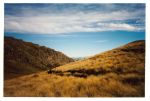
Sitting in Starbucks, my study away from home, an alarm clock rings. It sounds just like my alarm clock—and I sit there, wondering whether I’m asleep, still in bed, running late to class. Or maybe I’m in a coma, and outside noises are able to penetrate the film of my comatose state, but they can’t wake me up. I wonder whether Haff is leaning over my recumbent figure, whispering words of love in my ear, maybe saying goodbye after years of waiting. And I think, “Wake up!”
I’m stuck in limbo—aware of my predicament and completely unable to do anything about it—until someone finally turns the alarm clock off. I return to my comatose dreams, studying for a take-home that isn’t going too well. And I wonder, if it’s all a dream, why can’t I make it a fun one? Why not go for a walk in Central Park, or for an early show at the cinema? I get back to my take-home.

Late one night, I come home after an evening out with Dana. I turn on the light in the living room and have a shower. I enter the dark bedroom—Haff sleeping on the mattress on the floor. He wakes up as I fumble around for my earplugs, and with a look of sheer terror he leaps back into a crouch and screams. He looks as if he’s seen a ghost, and he is looking straight at me. I hug his trembling body, tell him that everything’s okay, that it’s just me, and that I’m not a ghost. I’m not a ghost. I’m not.
Late at night, studying, I look over my shoulder—repeatedly, obsessively—expecting to be surprised by an intruder. Blinking, I see the gleam of a knife. I look out through the shades, squinting, trying to make out the figure of a stranger on our patio. In the shower, I wash my face with my eyes open, peering out through the transparent curtain. I open the bedroom door into darkness, always anticipating the pouncing stranger, the mutilated boyfriend. The constant anticipation of violence.
I’m walking with Michal on the gravel paths of Julis, my skin itching underneath my shiny dog tag, my ink-smudged fingers clutching an Uzi. I’m leading her in a guided imagery exercise, asking her to visualize the mess hall, the bathrooms, our tents. When I am convinced the mental pictures are complete, the minutiae adequately captured—I raise my hands, and together we obliterate each of these, one by one by one, willing mushroom clouds to wipe them out. We imagine the entire base disappearing in a cloud of dust. Poof! For twelve days of basic training, this is our daily ritual. Two days earlier, we had signed our lives away—voluntarily, the forms emphasized—had unwittingly allowed the IDF to sink its teeth into our virgin throats.
When my father picks me up from the bus station, I break down and cry. It feels good. He hugs me and pats me on the back. He pulls back, looks around and asks why I’m the only one crying. Everyone else looks like they had fun. I stop crying. A year and a half later, putting on my uniform before heading for another day in the bunker, my mother tells me she’s thinking of leaving my father. (“Do you have a minute? So I think I’m going to leave your father.”) My distraught reaction confuses her—it’s her marriage, not mine. It’s her cancer, not mine. I stand corrected, and I stop crying before the first tear hits the ground.
The morning I leave my spying days behind, Bob Dylan sings to the crowd gathered on the lawn. “There ain’t no use in callin’ out my name, I can’t hear it anymore.” We gather for a collective “Meep!”—our bodies intertwined in a final embrace.
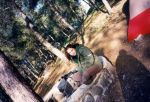
I’m with Dana and Moshe and Tamar and Lior and Galit, listening to Lou Reed sing about the wild side, singing with Harry Nilsson about a lime and a coconut, watching Priscilla Queen of the Desert for the umpteenth time. I am reading 1984 as I visit Naaman in Paris, listening to Robert Wyatt’s Old Rotten Hat. It’s 1995, and we play music on each other’s backs, we play Faure’s Dolly together on the piano. (Today I get an e-mail from him. It reads, “I feel happy and energetic like a vacuum cleaner at its maximum.”)
I am on a school retreat in Jerusalem, heart-broken, listening to Paul Simon on my Walkman. I’m alone in Scotland, age sixteen, climbing the hill to the castle in Edinburgh, listening to Take 6. I’m singing “Parcel of Rogues” on a train from Glasgow to the middle of nowhere, surprising a pen pal I have never before met. I’m in Scotland, again, on my pre-military trip with Galit, getting drenched as we descend Ben Nevis. We’re singing Israeli songs at the top of our lungs. I’m in the military, my head sticking out of the open sunroof of Tal’s father’s car as we drive through the Negev, singing Abba songs to the open desert.
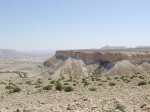
We’re driving through a mountain pass, heading east from Wanaka. Brenda creaks and groans as we forge ahead on the gravel road. I’m in the driver’s seat, sick, and singing with Paul Simon. At ninety km/h, our windshield is instantaneously transformed into a beautiful, shiny mosaic. I gasp, slow down, and pull over. Galit and I sit in the car, looking at each other in disbelief, waiting for a million little pieces to fall in our laps. We watch in a daze as a man places a sheet over our dashboard, and silently starts hammering at the glass, pulling it all out bit by bit. He tells us we’ll need to get a temporary plastic windshield and points us in the right direction. He leaves us without telling us his name, but we know who he is—he’s our guardian angel, our very own Mr. Wolf.
Back in Tel-Aviv, driving with Haff around the square looking for a parking spot, he asks his guardian angel to help him out. Frank complies.
We yell words of gratitude at his departing figure, at the back of his Jeep as it speeds away. We sit in the car for a while. I wrap myself in the long red scarf Dana’s mom made for me (which I will soon lose, twice—the second time for good), and I put on my gloves. I turn on the ignition, and carefully make our way back into the lane heading East. Paul is still singing, but we can’t hear him—the wind whooshes by through the open frame. Brenda makes a good motorcycle. She seems to enjoy the role-play, and we enjoy it too—driving through the colorful mountains, with nothing to obstruct our views.
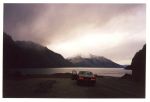
April 30th, 9AM. Perched in front of my computer, peeping at the tulips on the patio. I’m writing an autobiography and summarizing research on personality. I’m multi-tasking, reading and typing at the speed of light—my pianist fingers a blur on the gray keyboard—but my inner narrator is sluggish and loud. I’m not even sure what she’s saying, but the tempo disparity between my two selves is so jarring, I pause momentarily to wonder whether I’m having a nervous breakdown. I feel calm, and strangely unanxious. I wonder whether that’s what a nervous breakdown feels like. Later in the day, I’m sitting in the last class of the semester. A student tunes her violin, and I think of home.
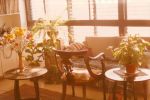
I’m listening to Bach’s violin sonatas. I am age four to twenty, sitting in my old living room, listening to any of my mother’s students playing. I’m in the kitchen, preparing snacks for the intermission. I am reading in my bedroom, avoiding the audience. I’m eleven, in my own concerts—my palms sweaty, my nerves wrecked. Omens for a future to come. I’m with my family, wiping my tears and hummus at our favorite Middle Eastern restaurant. We’re going through the motions of our post-concert ritual, discussing who we thought played well, what we liked, what we didn’t. I’m trying to calm my agitated nerves, riding the wave of musical performance.
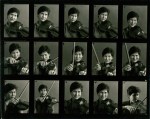
What color is your pain, she asks me. I think about it, and whisper purple. And what shape? A triangle. She hugs me. She is love. When she’s away, I sneak into their room and sniff her pillow. I climb on a chair, open the top drawer of her dresser, and wrap myself in her scarves.
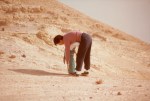
Recently, standing in the shower, I realized that I might not get to see my sixtieth birthday. I cried silently, my tears making their inconspicuous way down the drain. A few days earlier, talking to my mother during work, she told me that she was thinking about euthanasia. Euthenasia. Euthinasia. Eurasia. Fantasia. Eurythmics.
Back in the office, on the phone with my mother, I respond logically, calmly. I tell her that I understand, that when the time comes, we will let her go. (Where? And how soon after will I follow?) I don’t cry and scream and thrash around like I want to, like I know I should, like I know I won’t be able to later. Part of me remembers that it’s her euthanasia, not mine.
In the shower, on my way to school, I have no time for anxiety. But anxiety has plenty of time for me.

I see us in a house—designed by my father, engineered by Leo, built by Haff and decorated by me. My mother plays for us as we work. Haff jumps out of the bedroom balcony into the pool, and climbs up a tree he’s planted in our garden. I start the morning with some Brahms on the Bösendorfer in the living room, dawn all around me. Lyla, Jasmine and Thomas climb out of their beds, fresh and sweet and beautiful. They sit on the sofa—still our green Jennifer Convertible—and conduct a tri-lingual conversation about cereal.
Cautiously, agonizingly, magically, I learn to dream.
May 2007
 All of the Worlds